South Korea Launches National AI Strategy With $7 Billion Budget

Seoul Goes All-In on AI Sovereignty
South Korea's President Yoon Suk-yeol has announced a comprehensive national AI strategy backed by 9.4 trillion won ($7 billion) in government spending through 2028. The plan aims to position South Korea among the top three AI nations globally and reduce dependence on foreign AI models and infrastructure.
The strategy, unveiled at the Korea Advanced Institute of Science and Technology in Daejeon, covers four pillars: sovereign AI model development, GPU computing infrastructure, industry AI adoption, and talent development.
National GPU Cluster
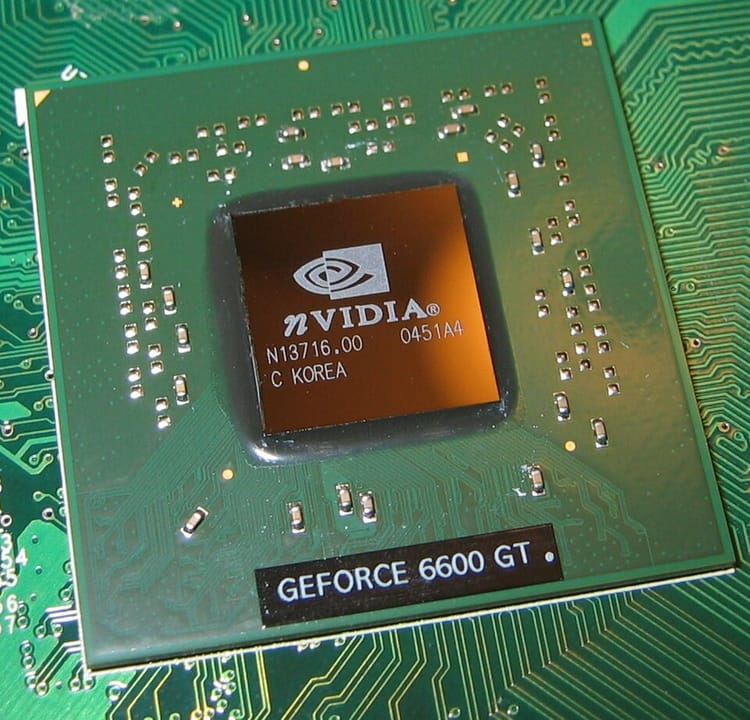
The centerpiece is a national AI computing center housing 10,000 Nvidia H100-class GPUs, to be operational by mid-2026. The government will invest 1.5 trillion won in the facility, which will provide subsidized compute access to Korean startups, universities, and research institutions.
Science and ICT Minister Lee Jong-ho said the cluster "ensures Korean companies can train world-class AI models without depending on foreign cloud providers." He noted that Korean AI startups currently spend 60% to 70% of their operating budgets on cloud computing, mostly from AWS and Google Cloud.
Homegrown AI Models
The government will fund development of Korean-language large language models through partnerships between Samsung Electronics, Naver, and Kakao. Naver's HyperCLOVA X and Kakao's KoGPT will receive direct R&D funding to compete with GPT-4 and other frontier models on Korean-language tasks.
Naver CEO Choi Soo-yeon said the company "welcomes government support that levels the playing field with heavily funded US and Chinese AI labs." Naver currently operates the most widely used Korean-language AI assistant through its search platform.
Talent Pipeline
The strategy includes creating six new AI graduate schools, expanding AI-related university enrollment by 3,000 seats annually, and launching visa fast-track programs for foreign AI researchers. The government projects Korea will need 50,000 additional AI specialists by 2028.
Industry observers noted the plan's similarities to Japan's semiconductor strategy and the EU's AI Act framework. Cho Sung-jin, an AI policy researcher at the Korea Institute of Science and Technology, said the "real test will be execution speed — AI moves faster than government procurement cycles."