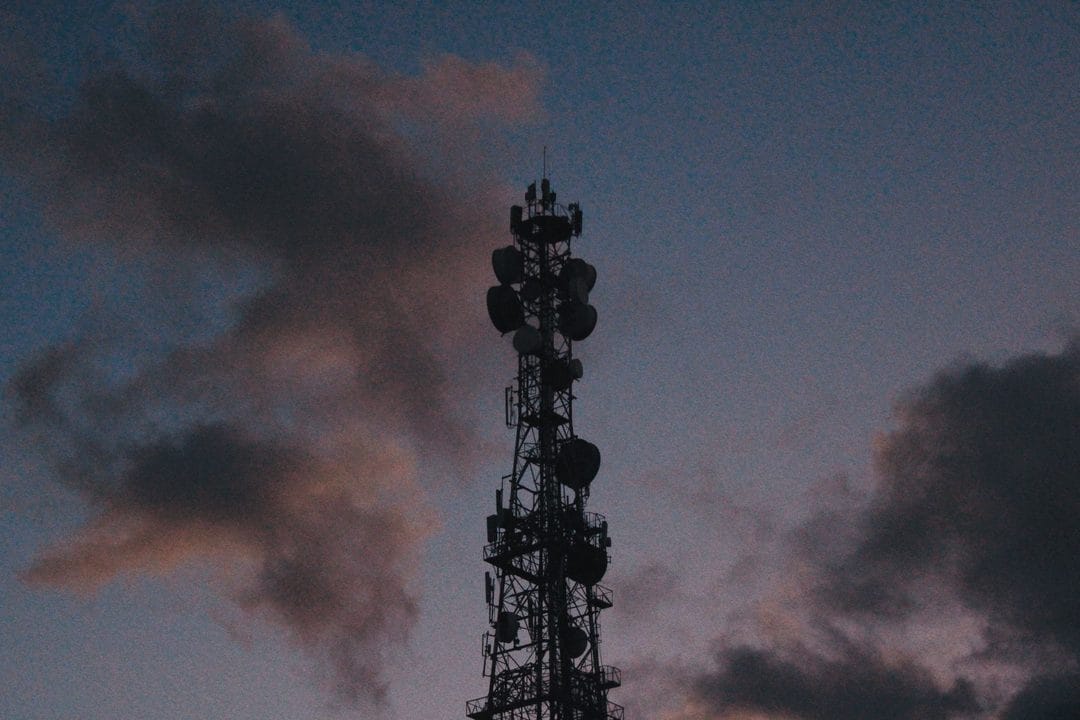
Huawei is extending its Tau Scaling Law from chip design into wireless infrastructure, according to a company statement reported by the South China Morning Post on 28 October 2026. The company says the "time compression" concept behind Tau is now being applied to its next-generation base stations, with the UBBPi baseband unit as the first product. The move matters less for the handset market than for the wider contest over export controls: it shows Huawei trying to keep a design approach going in products where US restrictions on advanced lithography tools are harder to apply directly.
What Huawei says the base-station products deliver
Huawei describes Tau as a design principle that focuses on time compression and system-level efficiency rather than on shrinking transistors. In the company's framing, the gains come from how signals and processing are organised across a whole system, not from a smaller physical node. The UBBPi baseband, according to the statement, delivers a 1.3-fold gain in average network experience and cuts energy use by 40 per cent. Both figures are Huawei's own numbers. The SCMP report and the company materials available for this article do not include independent test results, and no third-party lab measurements were published alongside the announcement.
Baseband units sit at the centre of a base station, where radio signals are converted into digital data and processed before they reach the core network. Energy use is a major cost for mobile operators, because base stations run around the clock and cooling and power draw accumulate across tens of thousands of sites in a single national network. A claimed 40 per cent cut would therefore be commercially meaningful if it holds up under operator testing, which is the step the company's figures have not yet passed in public.
The announcement also fits a pattern in Huawei's communications. Coverage of the announcement described the base-station move as an extension of Tau beyond smartphones, and the company's stated metrics centre on energy use and network experience rather than on process node figures. That emphasis is consistent with a company that cannot readily buy the most advanced lithography equipment and has to show competitiveness through architecture and system integration.
The LogicFolding roadmap and the 2031 target
Huawei first presented Tau in May 2026 alongside a chip architecture it calls LogicFolding. Tom's Hardware reported at the time that Huawei claimed LogicFolding could reach transistor densities equivalent to a 1.4-nanometre-class process by 2031 without advanced extreme ultraviolet lithography, which is the category of equipment that US export controls have restricted. The same report cited a claim of 55 per cent higher transistor density. Like the base-station figures, these are company projections, not measured results from fabricated silicon.
The 2031 date is a long horizon in a sector where roadmaps often slip by a year or more. Foundry operators in Korea, Taiwan and Japan are targeting 2nm-class production in the near term, which means Huawei's stated goal would be a generation behind the leading edge when it arrives, if the schedule holds. The company has not published a detailed process description that outside engineers can check, and the reported density figure is therefore a claim that the wider industry has not yet been able to test.
Ren Zhengfei, Huawei's founder, has publicly backed Tau as the path forward for the company under sanctions. A Science and Technology Daily report, cited in coverage of the announcement, quoted him describing the approach as the only route for Huawei to break out of the restrictions. The statement is a clear signal of corporate priority. It does not, on its own, establish that the technology works at the scale claimed.
Why base stations are a different test
Chip roadmaps get most of the attention, but infrastructure is where a supplier's position can be tested most directly. A telecom operator buys base stations in large batches, runs them under service-level contracts, and measures energy use and network performance at every site. A vendor that wins a major tender needs reliable hardware, a software stack that operators can maintain, and a supply chain that delivers components on schedule. Those requirements are harder to fake than a press-release benchmark. Procurement decisions weigh energy use over the life of the equipment, not only the purchase price, so efficiency claims carry weight in tenders. That gives a claimed energy cut a practical role in the sales case, and it also gives operators a clear test to run before they commit.
That is also why the base-station rollout matters for the export-control debate. US restrictions have focused on advanced chips and the equipment used to make them, and a vendor that can deliver competitive system performance with older process nodes would weaken the intended effect of those rules. The reverse is also true: if the Tau approach cannot match rival equipment on energy and throughput when operators test it side by side, the announcement will have limited impact beyond China's domestic market.
Huawei already supplies telecom equipment to operators in China, so any commercial gain from the new baseband would appear in the home market first. The sources reviewed for this article do not give Huawei's share of China's base-station orders, so the size of that gain cannot be estimated from public data here. Expansion into other markets would face competition from established suppliers and from the commercial and regulatory questions that surround Huawei's equipment in several countries.
Dependence on domestic AI stacks
The wider Chinese technology sector is also moving toward domestic platforms. SCMP reported a SemiAnalysis view that DeepSeek will likely rely primarily on Huawei's technology stack by 2027 or 2028, describing it as already mature and well developed. The assessment is an external forecast, and SemiAnalysis is a research firm whose estimates are open to debate. It is still an important marker of how Chinese AI developers are thinking about hardware supply under sanctions.
If that transition happens, the value of Huawei's architecture work increases. A model developer that trains and serves its models on a single vendor's stack depends on that vendor's roadmap for chips, networking and software tools. A long-term shift of that kind would also make energy efficiency and system design more important, because data-centre power is a constraint across the region. The base-station claims and the AI stack question are therefore connected by the same underlying issue: how much performance a constrained supply chain can extract from each unit of power.
Analysts and rival chipmakers will be watching for independent confirmation. Measurements from operators or third-party labs would count far more than further company statements. Until then, the figures remain the company's own, and the SCMP coverage described them that way.
Export controls and the cost of a slower path
The export-control regime that Tau is meant to work around has been tightening in stages. Restrictions on advanced lithography tools, which are used to print the smallest features on leading-edge chips, have been the centre of that effort. Equipment makers in Japan and the Netherlands, as well as US companies that supply software and design tools, are also covered by parts of the rules. For a Chinese vendor, the practical result is that the most advanced process nodes are hard to reach through conventional routes, and each generation of hardware costs more to produce. The rules apply most directly to manufacturing tools, which is why design-led approaches draw close attention from analysts. Whether the controls slow Huawei's roadmap is therefore a question about timing as much as capability.
A design-led strategy changes that cost structure without solving the underlying problem. If a company can reach comparable system performance by reorganising how work is split across chips, basebands and software, it may need fewer of the most expensive manufacturing steps. The trade-off is that architectural gains are harder to verify and can be overtaken quickly when rivals move to a new process generation. Whether Huawei's approach produces a lasting advantage will depend on how fast the rest of the industry moves on its own roadmap.
Rival suppliers are not standing still. Telecom equipment makers in Europe, South Korea and Japan have their own product lines and their own energy-efficiency targets, and operators in several countries have set network carbon goals that favour lower-power hardware. A vendor that cannot sell into those markets because of security or regulatory restrictions has to compete on its home market and on price in the markets it can reach. That limitation is part of why the energy figures in the announcement matter to the company's commercial position.
The coming year will show whether the announcement becomes a procurement story. Operators publish tender results, equipment deployments and network performance reports, and those documents will confirm or contradict the company's energy and throughput numbers far more reliably than any press statement. Analysts following the sector are likely to look first at the first commercial deployments of the UBBPi baseband and at whether Huawei discloses test conditions for the 1.3-fold gain.
What is confirmed and what is not
The confirmed facts in this story are narrow. Huawei has announced that elements of its Tau Scaling Law are being applied to next-generation base stations, starting with the UBBPi baseband. The company has published performance and energy figures for that product. It has also set a 2031 target for 1.4-nanometre-class density under its LogicFolding architecture, and its founder has endorsed the approach publicly.
The unconfirmed parts are larger. No independent measurement of the baseband figures was included in the reporting used here. The LogicFolding density claim has not been demonstrated in shipping silicon in the sources reviewed, and the route to the 2031 target was not described in process-level detail. The reported dependence of DeepSeek on Huawei's stack rests on a single external forecast. Each of these points is a question that operator trials, product benchmarks or regulatory filings could answer in the coming months.
The next concrete marker is commercial deployment. If operators in China begin to order the new base stations in volume and publish their own performance results, the Tau claims will move from announcement to market fact. Until that happens, the story is a clear statement of intent from one of the world's largest telecom equipment makers, made under the pressure of export controls that still shape the company's choices.