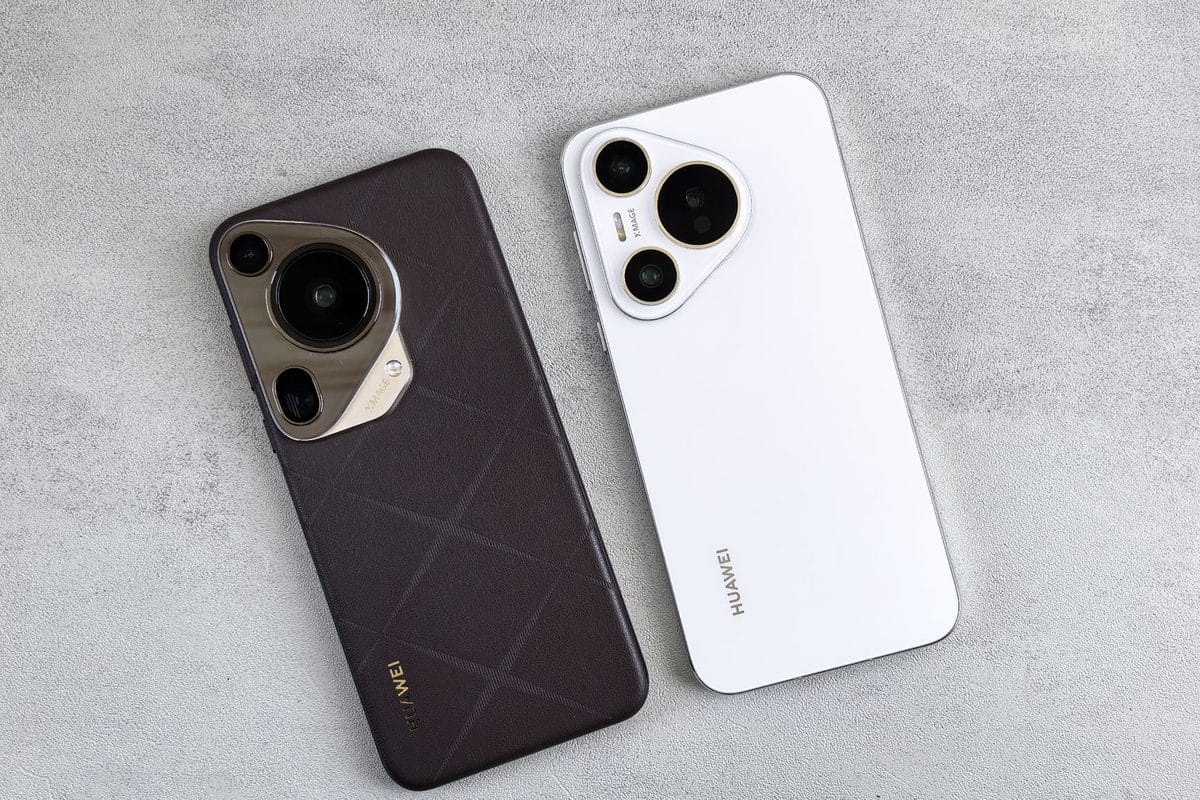
Huawei Technologies unveiled its Mate 90 smartphone series in China on Thursday, October 1, pricing the top Pro Max model 2,000 yuan above its predecessor at launch as rising memory costs and limited access to advanced chipmaking tools squeeze the company's flagship line, Reuters reported. The Mate 90 Pro Max with 16 GB of memory and 512 GB of storage costs 9,999 yuan ($1,491), while the standard Mate 90 and the Pro start at 5,999 yuan and 6,999 yuan.
The phones arrive during China's National Day holiday, in a domestic market where weekly handset sales have fallen by double digits year on year since July, according to Counterpoint Research. Technology.org reported that the launch event began at 10 a.m. local time and that sales opened at 12:08 p.m. the same day through online stores, physical shops and third-party retailers.
Five models across three chip tiers
Huawei split the range by processor. The base Mate 90 runs the Kirin 9030 and the Pro uses the Kirin 9035, while the Pro Max, a Pro Max Collector's Edition and the luxury RS Ultimate Design use the new Kirin 9050 Pro, according to Technology.org. All five models run HarmonyOS 7, Huawei's Android-free operating system, which the company says supports more than 450,000 apps and services.
| Model | Chip | Starting price (yuan) |
|---|---|---|
| Mate 90 | Kirin 9030 | 5,999 |
| Mate 90 Pro | Kirin 9035 | 6,999 |
| Mate 90 Pro Max | Kirin 9050 Pro | 9,499 (9,999 for 16 GB/512 GB) |
| Pro Max Collector's Edition | Kirin 9050 Pro | 10,999 |
| Mate 90 RS Ultimate Design | Kirin 9050 Pro | 12,999 (18,999 for 2 TB) |
Prices are from Technology.org, BigGo Finance and Reuters. Huawei said its top-end Mate 90 models deliver a 31% increase in overall performance over the previous flagship generation, according to Reuters. Separately, Technology.org reported that the company puts the base Mate 90 at 27% faster than the Mate 80, which launched in November 2025. Both figures come from Huawei and have not been independently tested.
LogicFolding stands in for smaller transistors
The Kirin 9050 Pro is built with a technique Huawei calls "LogicFolding," which restructures a chip's internal wiring in three dimensions rather than the conventional flat layout. Reuters said the method allows denser, faster processing but requires more wafers to produce. Technology.org reported that the chip first appeared in Huawei's Mate XT 2 tri-fold phone in September.
Huawei did not disclose who manufactures the processor. Semiconductor Manufacturing International Corp (SMIC), China's top logic foundry, is widely believed to produce the Kirin chips used in the Mate series as well as Huawei's Ascend AI processors, Reuters said. SMIC did not respond to a request for comment.
Richard Yu, who heads Huawei's consumer business, told reporters that advanced semiconductor capacity "remains very limited in China" and that Ascend AI chips draw on the same capacity as phone processors. He said China's advanced chipmaking still relies on deep ultraviolet (DUV) lithography machines, and described extreme ultraviolet (EUV) technology as "valuable" but still something Chinese manufacturers are working toward. Yu added that Huawei would use more LogicFolding chips in future phones. Eric Xu, Huawei's rotating chairman, said at a Shanghai media event last month that supply of the Ascend 950 AI chip could not meet domestic demand because of capacity constraints.
No verified benchmark results for the Kirin 9050 Pro were available at the time of publication. BigGo Finance reported an unverified Geekbench 7 listing with a single-core score of 1,117 and a multi-core score of 5,076, which it said places the chip's CPU performance between Qualcomm's Snapdragon 8 Gen 1 and Gen 2.
Memory costs reach the price tag
Yu said rising memory prices have added an average of $200 to the cost of each handset, weighing on Huawei's margins. "We have to increase prices as well, yet at a slower pace," he said, according to Reuters.
Huawei is not alone. Xiaomi launched its 18 Pro on September 23 at 5,999 yuan, 1,000 yuan or about 20% above the equivalent model from the previous generation, according to Technology.org. At the launch, Xiaomi President Lu Weibing said memory prices have climbed for more than a year and a half and that industry forecasts point to further increases through 2027.
In the United States, Samsung Electronics raised the list price of its Galaxy S26 series by up to $200 on its official website, with the base 256 GB model now at $999.99, BigGo Finance reported. The wider market faces a sharp contraction. IDC forecast in August that global smartphone shipments could fall 16.7% this year, the steepest annual drop on record, while Counterpoint projects a 14% decline, the South China Morning Post reported. Counterpoint has also estimated that roughly 230 million budget phones priced under $200 will disappear from the market by 2030.
Huawei grows in a shrinking market
China's domestic smartphone shipments fell 7% year on year between January and August, while Huawei's rose 13%, according to IDC data cited by Reuters. IDC also found that the average selling price of smartphones in China climbed 11.3% in the second quarter to $543, while Huawei's average price declined 14.7% to $628. Technology.org, citing IDC, put Huawei's second-quarter share of the Chinese market at 22.6%.
Apple has been the other beneficiary. Sales of the iPhone 18 Pro series in their first three days after the September 18 launch were 12% higher than sales of the iPhone 17 Pro line during its entire first week last year, Counterpoint said. Apple captured 33% of China's smartphone market in the week of September 14 to 20 and took the top spot. "Price hikes of over US$200 on many Chinese flagship models may have raised the price anchor, strengthening the iPhone's relative value proposition," Counterpoint senior analyst Ivan Lam said.
Foldables become the next comparison
Apple's first foldable, the iPhone Duo, goes on sale October 23. Counterpoint expects Apple to ship 6 million units in 2026, with China accounting for nearly a quarter of that total, Reuters reported.
Yu said Huawei holds about 75% of China's foldable phone market. He said sales of Huawei's Pura X Max foldable rose 76% week on week between September 10 and 13, right after Apple's Duo announcement, and that shipments of the phone have topped 1.2 million units in China since its April release. "I am very pleased to see the launch of a similar product by our peers," Yu said.