SMIC Achieves 5nm-Equivalent Process Without EUV Lithography
SMIC Pushes DUV to Its Limits
Semiconductor Manufacturing International Corporation has begun producing chips at a 5nm-equivalent process node using exclusively deep ultraviolet (DUV) lithography equipment, according to teardown analysis published by TechInsights. The achievement bypasses US-led export controls that have blocked China's access to extreme ultraviolet (EUV) lithography machines from ASML.
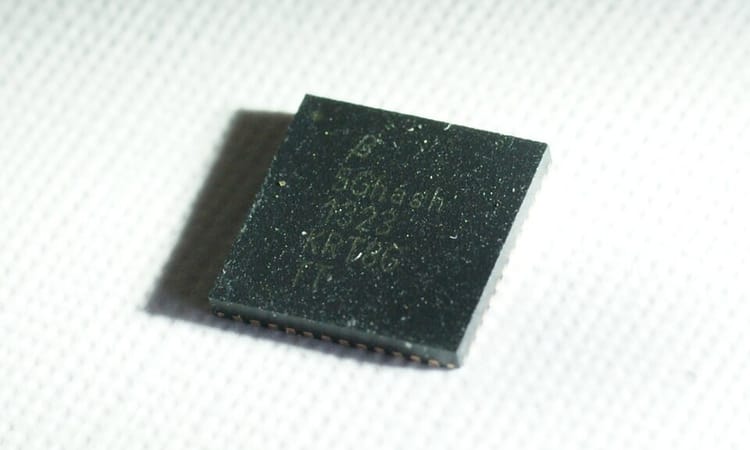
TechInsights researchers found the 5nm-class chip in a Huawei Mate 70 Pro device purchased in Shenzhen. The processor, designated Kirin 9100, contains approximately 15.7 billion transistors and uses multi-patterning techniques on ASML's NXT:2050 DUV scanner to achieve feature sizes comparable to TSMC's N5 node.
Technical Tradeoffs
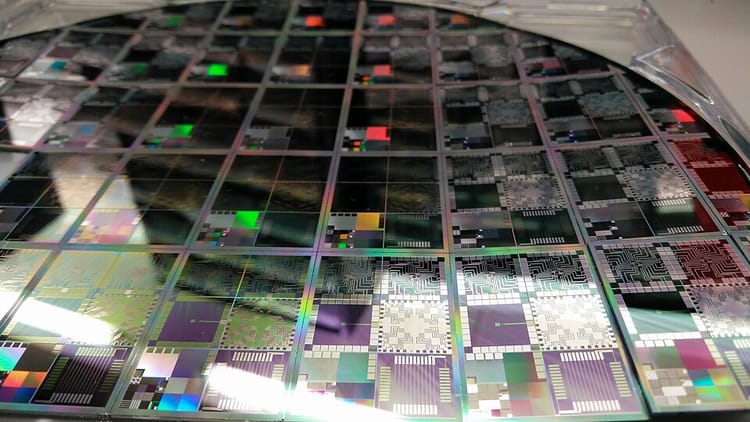
Multi-patterning at the 5nm level requires running wafers through the lithography system multiple times per layer, dramatically increasing manufacturing time and cost. Industry analysts estimate SMIC's approach uses four to five patterning passes where a single EUV exposure would suffice.
Dan Hutcheson, vice chairman of TechInsights, said the achievement "demonstrates remarkable engineering persistence" but cautioned that yields are likely "significantly lower than what TSMC achieves with EUV." He estimated SMIC's manufacturing cost per wafer at 5nm is three to four times higher than TSMC's.
Export Control Implications
The development is likely to intensify debate in Washington over the effectiveness of semiconductor export controls. The Bureau of Industry and Security implemented restrictions on EUV and advanced DUV equipment sales to China in October 2022, with subsequent expansions in 2023 and 2024.
Gregory Allen, director of the Wadhwani AI Center at the Center for Strategic and International Studies, said SMIC's progress "doesn't invalidate the export control strategy, but it does show that controls slow rather than stop Chinese semiconductor advancement."
Volume Production Questions
Whether SMIC can scale this process to high-volume production remains an open question. The multi-patterning approach's lower yields and higher costs may limit 5nm production to high-value chips where Huawei can absorb the premium. For most commercial applications, SMIC's 7nm node remains the practical leading edge.
SMIC has not officially commented on the 5nm achievement. The company's Q3 earnings report showed revenue of $2.17 billion, up 34% year-over-year, with capacity utilization above 90% across all nodes.