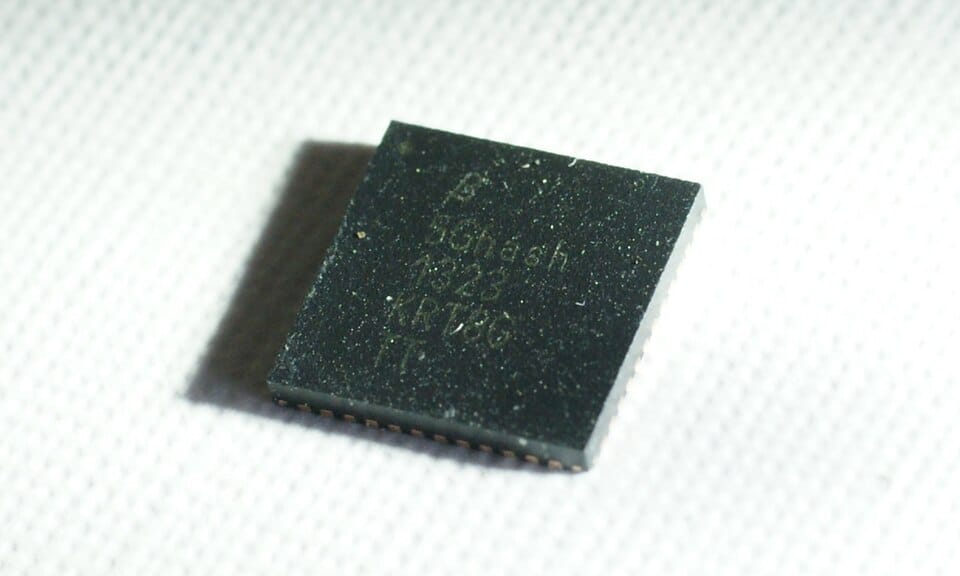
Samsung Electronics presented its first fully functional 2-nanometer gate-all-around (GAA) processor at the Seoul Semiconductor Forum on Monday, marking a pivotal step in the South Korean chipmaker's bid to reclaim ground lost to rival TSMC in the advanced foundry race.
The chip, fabricated using Samsung's SF2 process node, was demonstrated running a mobile AI inference workload on stage. Dr. Siyoung Choi, head of Samsung's foundry division, said commercial shipments to lead customers would begin in the fourth quarter of 2026.
Technical Specs and Architecture
Samsung's 2nm GAA node uses multi-bridge channel field-effect transistors (MBCFETs), a proprietary evolution of the nanosheet transistor design. The company claims a 25% performance uplift over its 3nm SF3 process, a 20% reduction in power consumption, and a 5% decrease in die area.
"Gate-all-around is the architecture that takes us beyond the physical limits of FinFET," Choi told an audience of roughly 2,000 industry executives and engineers. "Our 2nm node delivers the transistor density needed for next-generation AI accelerators and flagship mobile processors."
Samsung disclosed a transistor density of approximately 127 million transistors per square millimeter — putting it within striking distance of TSMC's N2 node, which the Taiwanese foundry has reported at around 130 million.
TSMC Comparison and Competitive Landscape
TSMC began risk production of its own 2nm N2 chips in late 2025 and has secured orders from Apple, Nvidia, and AMD. Samsung's timeline puts it roughly two quarters behind, though the Korean firm argues its GAA implementation offers superior power efficiency for mobile and automotive applications.
"Samsung is closing the gap, but TSMC still has a yield advantage," said Brady Wang, associate director at Counterpoint Research in Taipei. "The real test will be whether Samsung can hit volume production yields above 70% by early 2027."
Target Customers
Samsung confirmed that Qualcomm and Google are among the first customers evaluating the SF2 node for upcoming mobile and data center chips. The company also revealed a new partnership with a "major North American hyperscaler" for custom AI accelerator production, though it declined to name the client.
Samsung's own semiconductor division plans to use the 2nm process for the Exynos 2700 mobile processor, expected to power the Galaxy S27 lineup in early 2027.
Investment and Capacity
The company said it has allocated $32 billion in capital expenditure for its foundry business in 2026, with a significant portion directed at expanding 2nm production capacity at its Pyeongtaek campus south of Seoul. Construction of a new fab dedicated to GAA production is expected to complete by mid-2027.
Samsung also confirmed that its $17 billion fab under construction in Taylor, Texas, will be equipped for 2nm production, with operations slated to begin in late 2027.
Industry Outlook
The global semiconductor market is projected to reach $727 billion in 2026, according to the World Semiconductor Trade Statistics organization. Advanced nodes below 5nm are expected to account for roughly 22% of total foundry revenue this year, up from 18% in 2025.
"The 2nm race is really about AI," said Akira Minamikawa, a senior analyst at Omdia in Tokyo. "Whoever can deliver the most power-efficient transistor at scale wins the data center contract pipeline for the next three years."
Samsung shares rose 3.4% on the Korea Exchange following the announcement. TSMC's ADRs in New York were flat in pre-market trading.