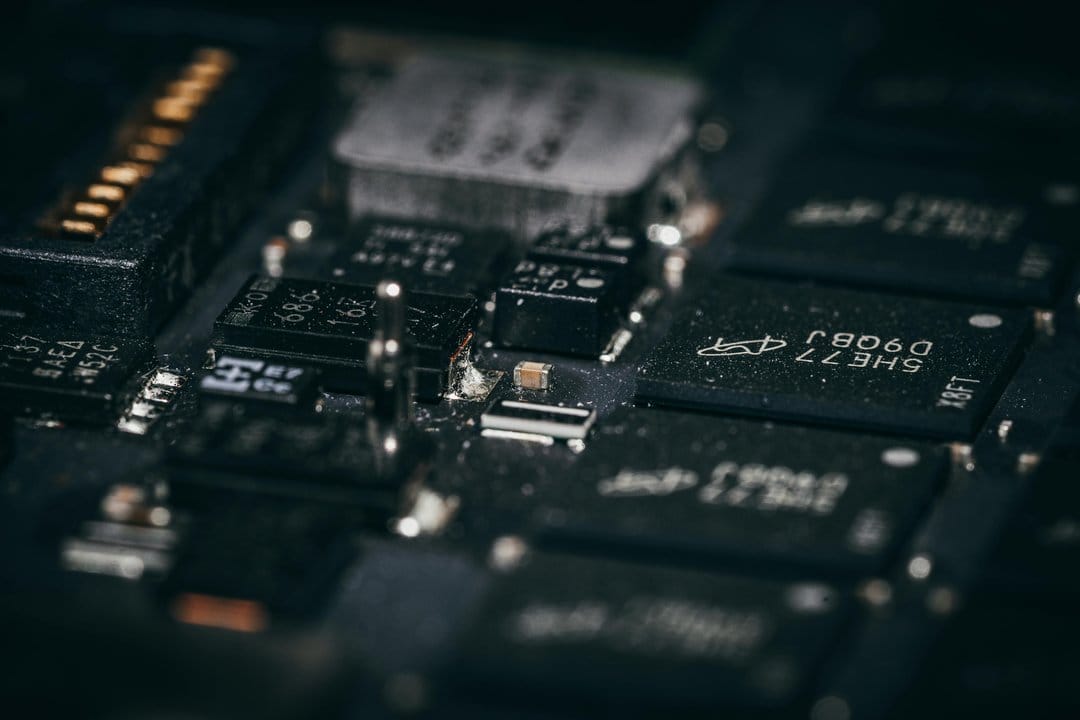
When people describe the artificial-intelligence boom in hardware terms, they usually reach for the processor — the GPU that does the heavy computation. But ask the engineers building AI systems where the real squeeze sits, and a different answer comes up again and again: memory. Specifically, a type called high-bandwidth memory, or HBM. It has quietly become one of the most important and most constrained components in the entire AI supply chain, and East Asia makes nearly all of it.
What HBM actually is
A modern AI accelerator can perform an astonishing number of calculations per second, but only if it can be fed data fast enough. That is the problem HBM solves. Instead of placing memory chips flat on a board some distance from the processor, HBM stacks memory dies vertically, one on top of another, and sits them right next to the processor on the same package. The short distances and the wide connection between them allow data to move at enormous speed.
For AI workloads, which constantly shuttle vast model weights and data in and out of the processor, that bandwidth is the difference between an expensive accelerator running flat out and one sitting idle waiting for data. As AI models have grown, the appetite for memory bandwidth has grown even faster — which is why HBM, not raw compute alone, has become the limiting factor.
Why it is so hard to make
HBM is genuinely difficult to manufacture, and that difficulty is the root of the bottleneck. Stacking memory dies and connecting them vertically through thousands of tiny channels demands extreme precision. Yields — the share of parts that come out working — are harder to achieve than for ordinary memory. Each new generation packs more layers into the same height, which makes heat management and structural integrity progressively trickier.
On top of that, the finished memory has to be married to the processor through advanced packaging, a step that has itself become a chokepoint. It is not enough to make the memory; the capacity to assemble it together with the processor is limited too.
Why this matters for Korea and Taiwan
This is where geography enters the story. The world's HBM supply is concentrated among a small number of memory makers, with the leading producers based in South Korea, alongside other significant players in the region. The advanced packaging that brings memory and logic together is dominated by Taiwan's foundry industry. In other words, the two narrowest parts of the AI hardware pipeline both run through East Asia.
That concentration has consequences. It has turned memory makers, once seen as producers of a commoditised, boom-and-bust product, into strategically vital suppliers with strong pricing power for their most advanced parts. It has drawn enormous investment into the region. And it has made the health of a handful of companies and facilities a matter of global economic significance — any disruption to HBM or advanced packaging ripples through the entire AI industry.
What to watch next
- Capacity, not just design. The constraint is increasingly about how much advanced memory and packaging can be physically produced, so expansion plans matter as much as performance specifications.
- The next HBM generation. Each step up in bandwidth and capacity tends to favour whichever maker masters the harder manufacturing first, reshaping market share.
- Diversification efforts. Buyers and governments are keen to spread this concentration, but the expertise is deep and not quickly replicated, so East Asia's lead is unlikely to erode soon.
The lesson of the AI hardware era is that the headline component is rarely the whole story. The processors get the attention, but it is the stacked memory beside them — and the regional industry that knows how to build it — that has quietly become one of the most valuable bottlenecks in technology.