China's three largest OLED panel makers — BOE Technology, TCL CSOT and Visionox — are pushing further into segments of the display market that South Korea's Samsung Display and LG Display have controlled for more than a decade, narrowing a technology gap that once separated the two countries by several product generations. The contest, long centred on flexible smartphone screens, is now extending into foldable phones and the emerging market for large-substrate OLED panels used in tablets and laptops, an area Korean makers have been counting on as their next major revenue source.
BOE's clearest foothold in the premium tier came through Apple. The Beijing-based manufacturer became a qualified supplier of OLED panels for the iPhone starting with the iPhone 14 generation, ending Samsung Display's position as Apple's sole flexible-OLED source and giving BOE a direct benchmark against Korean manufacturing standards. Apple has continued to expand the range of iPhone models eligible for BOE-made panels in the years since, according to the company's own supplier disclosures, even as Samsung Display has kept the largest share of iPhone OLED orders.
Foldables remain Korea's strongest ground — for now
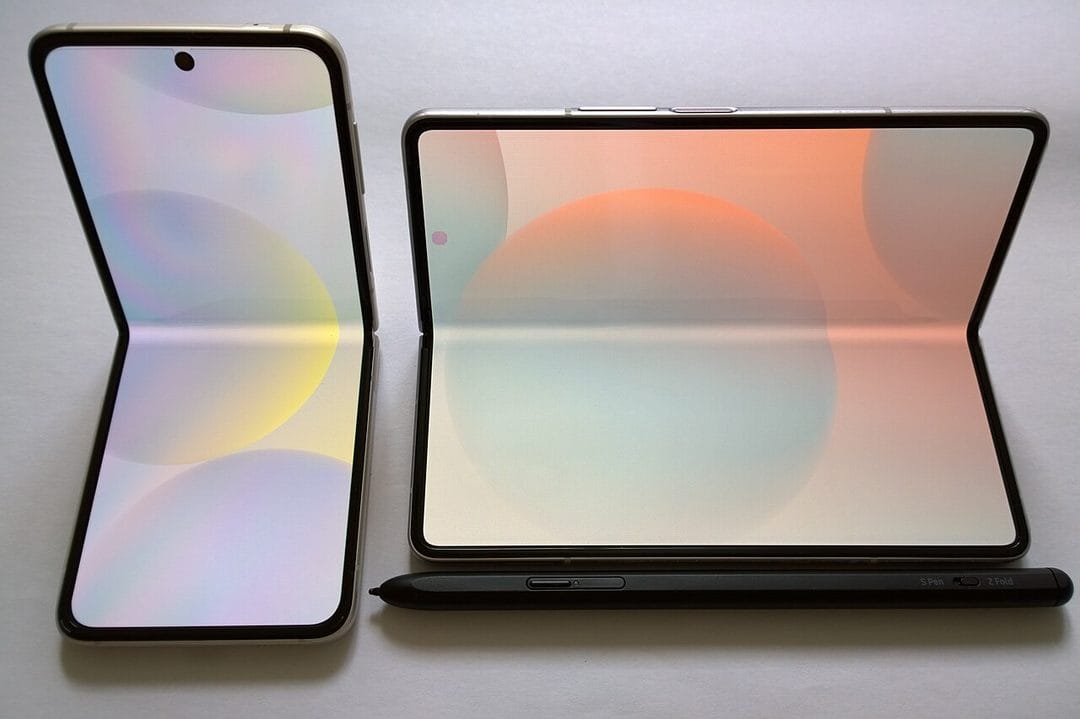
Samsung Display still supplies the folding panels inside its sister company's Galaxy Z Fold and Z Flip devices, and it sells foldable modules to several non-Samsung phone brands as well. That lead has not gone unchallenged. TCL CSOT and Visionox both ship flexible and foldable OLED panels to Chinese phone makers including Honor and Xiaomi, giving domestic brands an alternative to Korean supply for book-style and clamshell foldables sold primarily in the Chinese market. Visionox, the smaller of the two, has leaned on years of flexible-display research from its Kunshan and Gu'an fabs, though it has also disclosed financial strain from the capital intensity of scaling foldable production.
The gap between Korean and Chinese foldable panels shows up most in durability and crease performance rather than in headline specifications. Samsung Display's ultra-thin glass cover process, refined across five generations of Galaxy Z devices, remains a reference point that Chinese suppliers are still working to match at comparable yield rates.
An echo of the LCD transition
The pattern is familiar to anyone who tracked the previous decade of flat-panel manufacturing. BOE overtook both Samsung Display and LG Display in LCD panel shipments during the 2010s, using state-linked financing to build fabs faster than Korean rivals could justify on their own balance sheets. Samsung Display exited LCD production entirely to focus on OLED, and LG Display shut down its Korean LCD TV panel lines in 2022 for the same reason: Chinese capacity had made the segment structurally unprofitable for a Korean cost base. Some display industry analysts, including researchers at DSCC and Omdia who track panel shipments quarterly, have pointed to the same dynamic now unfolding one tier up, in OLED rather than LCD.
The next front: tablets and laptops
Where the competition is shifting fastest is IT OLED — the industry term for OLED panels built for tablets, laptops and monitors rather than phones. Apple's 2024 iPad Pro redesign used tandem OLED technology, a two-stack panel architecture that doubles emitting layers to boost brightness and lifespan, sourced jointly from Samsung Display and LG Display. Both Korean firms have since moved to build dedicated Gen 8.6 OLED fabs sized for larger IT-market substrates, betting that tandem OLED becomes the standard for premium tablets, laptops and monitors over the next several product cycles.
BOE has answered with its own IT OLED investment plans, aiming to bring Gen 8.6 capacity online to compete for the same tablet and laptop sockets. Reaching that market requires clearing a higher bar than smartphone OLED: laptop and tablet panels run for longer continuous sessions, demand tighter uniformity across a larger surface, and face closer scrutiny from device makers on burn-in resistance. Those are exactly the areas where Samsung Display and LG Display's longer manufacturing history still shows.
Why the shift matters beyond China and Korea
- Device makers gain negotiating leverage with a second or third qualified OLED source, a dynamic Apple has already used with BOE on iPhone panels.
- Panel pricing pressure typically follows supplier diversification, a pattern seen previously in the LCD market when Chinese makers scaled production.
- Korean display makers are responding by moving further upmarket — automotive OLED, foldables and tandem IT panels — rather than competing on cost in commodity smartphone screens.
LG Display has been the most visible example of that repositioning, having already scaled back some of its rigid and lower-tier mobile OLED lines in favour of automotive displays and the IT OLED segment it is now building out with Samsung Display. That leaves conventional smartphone OLED — the segment where BOE, TCL CSOT and Visionox have made the most progress — increasingly ceded to Chinese suppliers, while the fight over tandem IT OLED and foldables determines which country holds the technology lead through the rest of the decade.
None of the three Chinese manufacturers has announced a laptop or tablet OLED design win with Apple. Qualification for that tier typically takes several product cycles once a fab reaches volume production, the same path BOE followed on iPhone panels between its first Gen 6 flexible OLED line and its eventual entry into Apple's supply chain.
Apple's broader supplier strategy offers a guide to how quickly that could change. The company has spent much of the past decade methodically adding second and third sources for critical components — from chips to camera modules — once a supplier clears its qualification bar, largely to reduce dependence on any single factory or country. BOE's addition to the iPhone OLED roster followed that exact template, and device makers across the region are watching whether IT OLED, with its higher technical requirements and newer factories on both sides, will move on the same multi-year timeline or take longer to settle.