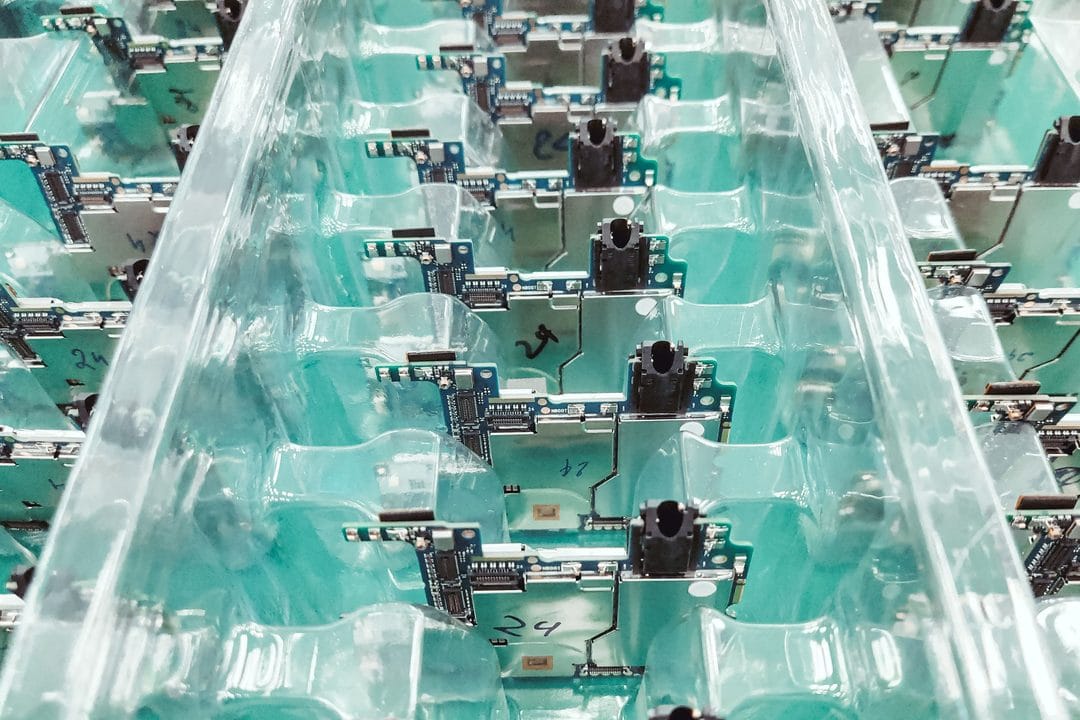
The best-performing technology stocks in Asia during the first half of 2026 were not the chipmakers building AI processors, but the component suppliers feeding their factories. Samsung Electro-Mechanics led the group tracked in MSCI's All Country World Investable Market Index, with shares rising roughly 660% over the six-month period. Japan's Kioxia Holdings followed with a gain of about 631%, a rally driven by surging demand for NAND flash memory that made the company Japan's most valuable by market capitalisation, at close to $300 billion.
The rest of the top performers were similarly unglamorous by AI-industry standards: Kingboard Laminates, which makes the copper-clad laminate used in circuit boards, rose about 535%; Taiwan's Yageo, a passive-components maker, climbed roughly 357%; and Unimicron Technology, a printed-circuit-board manufacturer, advanced about 345%. None of the five make the processors that headline AI announcements, but all five sit somewhere in the physical supply chain that has to expand before a single new data centre can be switched on.
Samsung's HBM4 and the memory supercycle
Samsung Electronics used the same period to unveil its next-generation HBM4 memory, aimed at tightening its position in the high-bandwidth memory chips that feed AI accelerators, and hosted an AI forum where an Nvidia business-development executive outlined how physical AI and digital twins are being used to accelerate semiconductor equipment manufacturing toward autonomous fabs. Goldman Sachs analysts said in a research note that the memory supercycle is still not fully priced into the South Korean and Taiwanese markets, and that they expect both countries to deliver the strongest earnings growth in the region through 2027.
The bank also flagged a risk on the other side of the same trade: retail trading activity and fast-shifting sentiment around AI could add volatility to a rally that has already run further and faster than most analysts expected at the start of the year.
A lawsuit shadows the rally
Not every recent headline in the memory sector has been about growth. A class-action lawsuit filed in the period alleges that Samsung, Micron and SK Hynix conspired to fix and inflate memory chip prices by as much as 700%, a claim the companies have not publicly addressed in detail. The timing complicates the supercycle narrative Goldman and others have been building, since the same price increases cited as evidence of a genuine supply shortage are also now the subject of litigation over whether they were coordinated rather than market-driven.
South Korea's SK Hynix and Samsung Electronics have separately committed to an investment drive worth roughly 800 trillion won, or about $518 billion, together with suppliers, to build new chip fabrication capacity in the country's southwest, with a further 81 trillion won earmarked for a chip-packaging cluster near Seoul. Neither company has said how the pending litigation might affect the pace of that spending.