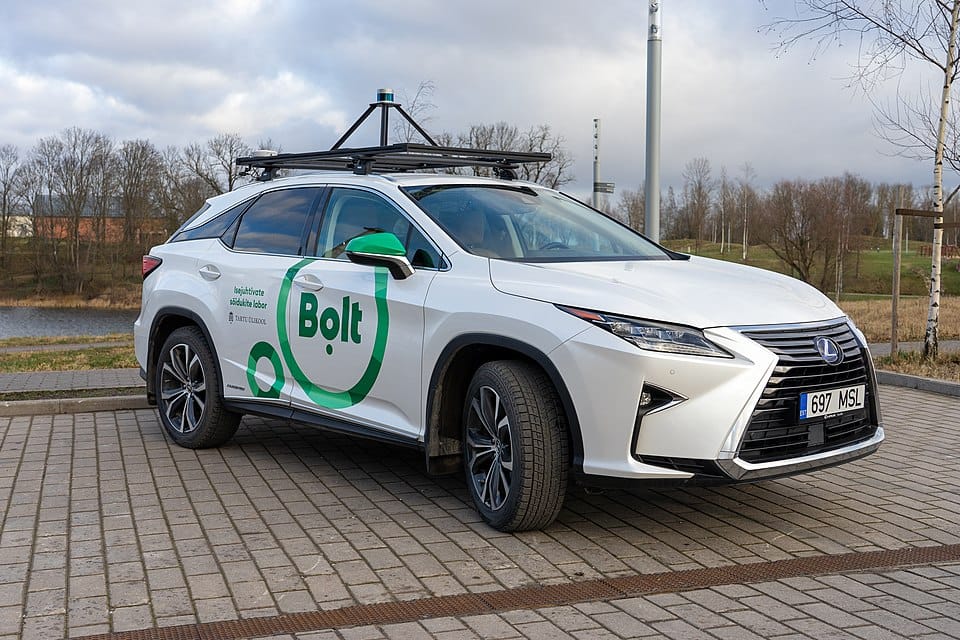
China Leads the World in Robotaxi Deployment
China's commercial autonomous taxi fleet has surpassed 10,000 vehicles operating across 25 cities, according to data compiled by the Ministry of Industry and Information Technology. Baidu's Apollo Go operates approximately 4,000 vehicles, followed by Pony.ai with 2,500, WeRide with 1,800, and AutoX and Didi Autonomous combined at approximately 1,700. The combined fleet serves over 5 million rides per month.
The milestone puts China significantly ahead of the United States, where Waymo operates approximately 1,500 vehicles across four cities. Baidu VP and Apollo Go head Wang Jingming said the scale advantage "accelerates our AI training loop — more vehicles generate more data, which improves the autonomous driving model, which makes the service safer and more efficient."
Expansion Timeline
The fleet has grown from approximately 3,000 vehicles at the start of 2025 to 10,000 in April 2026 — a more than threefold increase in 15 months. The expansion was enabled by regulatory approvals from municipal governments in second-tier cities including Chengdu, Hangzhou, Changsha, and Qingdao, which followed Beijing and Shanghai in permitting fully driverless commercial operations.
Wuhan has emerged as the most active robotaxi market, with over 1,200 vehicles and a fare structure that is 30% cheaper than conventional taxis. Apollo Go's Wuhan operation achieved its first monthly operating profit in March 2026, a milestone the industry has been watching closely.
Technology Maturation
The latest generation of Chinese robotaxis uses a combination of lidar, cameras, and radar for perception, with AI models running on domestic chips — primarily Nvidia's Drive Orin (for companies that purchased before export restrictions) and Huawei's MDC platform. Disengagement rates — instances where the vehicle hands control back to a remote operator — have fallen to approximately 0.3 per 1,000 miles, comparable to Waymo's reported rates.
Cost per ride is approaching parity with human-driven taxis in high-density cities. Apollo Go's unit economics show a cost of approximately 1.8 yuan per kilometer, compared to 2.5 yuan for conventional taxis. The gap is expected to widen as the technology matures and vehicle utilization rates improve.
Global Implications
China's scale advantage in autonomous driving deployment has implications for the global industry. The operational data generated by 10,000 vehicles provides a training advantage that smaller fleets cannot match. Chinese autonomous driving companies are also expanding internationally — Pony.ai operates robotaxis in Abu Dhabi, and WeRide has permits in Singapore and Saudi Arabia.
Autonomous mobility consultant David Silver said China's robotaxi expansion "proves the technology works at scale in complex urban environments. The remaining questions are about regulation, public acceptance, and business model sustainability — not technical feasibility."