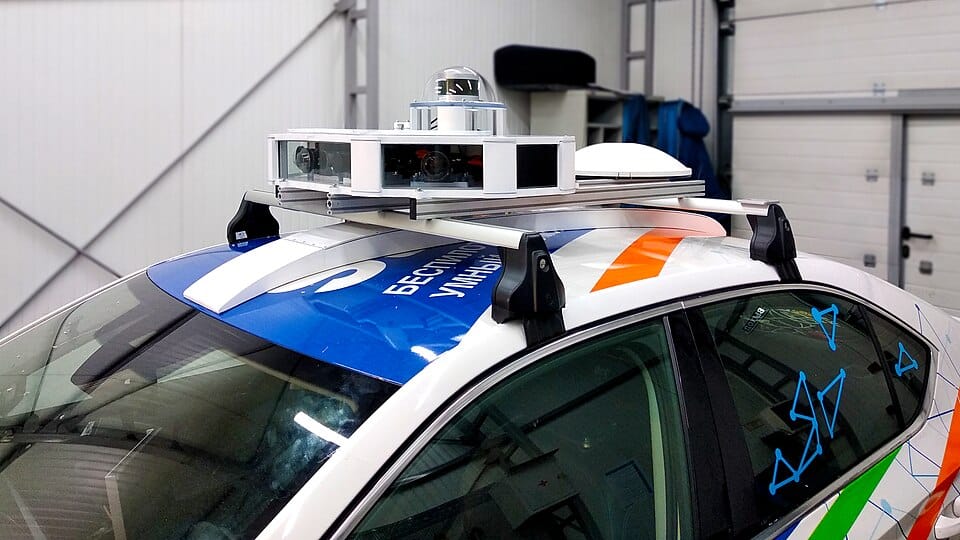
Chinese Autonomous Driving Firms Launch Commercial Robotaxi Services in Dubai
Baidu and WeRide have launched fully driverless commercial ride-hailing services in Dubai, marking the first time multiple Chinese autonomous driving companies operate robotaxis outside China simultaneously. Baidu's Apollo Go opened bookings on its proprietary app on April 1, while WeRide began fully driverless operations on March 30 through a partnership with Uber.
The launches represent a significant milestone for China's autonomous vehicle industry, which has until now operated almost exclusively within domestic borders. Dubai's Roads and Transport Authority has set a target of 25% autonomous journeys by 2030.
WeRide Achieves Profitability in Middle East Operations
WeRide, an autonomous driving company founded in Guangzhou in 2017, now operates more than 200 robotaxis in the Middle East. The company achieved operational profitability in the region since 2025, according to Asia Times, reaching that milestone well before achieving the same in its home market. WeRide's vehicles use the Geely Farizon platform equipped with the company's Level 4 autonomous driving software.
Baidu's Apollo Go uses its sixth-generation RT6 vehicles, purpose-built by Baidu. The Dubai deployment is the first international rollout of Apollo Go's proprietary platform. In China, Apollo Go runs the largest robotaxi fleet in the country but only recently reached unit economics break-even in Wuhan.
Domestic Competition Drives Overseas Expansion
The Dubai launches are part of a broader pattern of Chinese technology companies expanding into the Gulf as competition intensifies at home. China's automotive market share in Arab Gulf countries rose from approximately 2% in 2019 to about 15% in 2025, according to industry data. Chinese automakers shipped 8.32 million vehicles overseas in 2025, of which roughly 1.39 million went to Gulf countries.
Separately, WeRide and Grab have launched autonomous ride services in Singapore's Punggol district, the first deployment in a residential area, after trials covering 30,000 kilometers. The service is free during the initial phase, with commercial operations planned for mid-2026.
Broader AI and Tech Investment Flows Into Southeast Asia
The autonomous driving expansion comes amid a wider push by technology companies into Asian markets. Microsoft announced a more than $1 billion investment from 2026 to 2028 in Thailand's cloud and AI infrastructure. The company signed a grant agreement with Thai e-commerce platform aCommerce and AI firm Ai-ssistance, supported by the U.S. Trade and Development Agency, to integrate generative AI solutions into e-commerce operations.
Meanwhile, CaoCao Mobility has gained approval to test autonomous vehicles without safety drivers in Hangzhou, becoming the first company to do so in that city. The ride-hailing platform targets 100,000 vehicles across 100 cities by 2030.
BYD separately told analysts it now expects exports to reach 1.5 million vehicles in 2026, approximately 15% above its previous target of 1.3 million disclosed in January. Former Tesla China executive Kong Yanshuang has reportedly joined Xiaomi to oversee automotive sales as the company targets 550,000 vehicle deliveries in 2026.