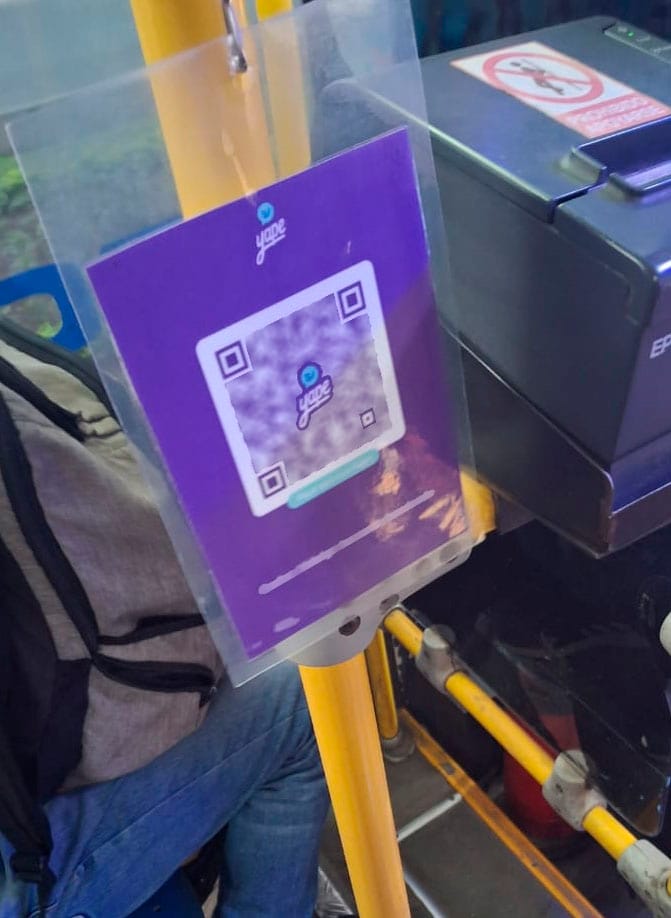
UPI Goes to Japan
The National Payments Corporation of India and SoftBank-backed PayPay Corporation have launched a cross-border payment linkage that allows Indian visitors to Japan to pay at 6.5 million PayPay merchant locations using UPI. The service works through a QR code scan — Indian users pay in rupees from their linked bank account, and the Japanese merchant receives yen.
NPCI International CEO Ritesh Shukla said the integration "demonstrates UPI's potential as a global payment rail, not just an Indian domestic system." Japan is the fifth country to accept UPI payments, following Singapore, the UAE, Bhutan, and Sri Lanka.
How It Works
Indian travelers scan PayPay QR codes displayed at merchant counters using any UPI-enabled app — Google Pay, PhonePe, Paytm, or bank apps. The transaction is processed in real-time, with the exchange rate set by the National Payments Corporation at a 2% markup over the interbank rate. No additional fees are charged to the consumer or merchant.
PayPay president Ichiro Nakajima said the partnership targets the growing wave of Indian tourists visiting Japan. Indian visitor arrivals to Japan grew 52% in 2024 to 340,000 and are projected to reach 500,000 in 2025. "This partnership removes the friction of currency exchange for a rapidly growing tourist segment," Nakajima said.
Strategic Significance
The UPI-PayPay link is part of a broader Indian government strategy to internationalize UPI and position it as an alternative to Visa and Mastercard for cross-border payments. If scaled across multiple countries, UPI could offer significantly lower transaction costs — NPCI charges 0.15% versus the 1.5% to 3% typical of card networks for cross-border transactions.
Japan's interest in the partnership reflects its own push toward a cashless economy. Despite being a technology leader, Japan remains heavily cash-dependent, with cashless transactions accounting for only 39% of payments, compared to over 90% in South Korea and 83% in China.
Expansion Pipeline
NPCI International is in discussions to extend UPI acceptance to France, Australia, and Malaysia. The organization aims to have UPI accepted in 20 countries by 2027. Each linkage requires bilateral agreements with local payment networks and regulatory approvals from both countries' central banks.
Former Reserve Bank of India deputy governor T. Rabi Shankar said UPI's international expansion "could reshape the global payments landscape if it achieves critical mass. The cost advantage over card networks is real and substantial."