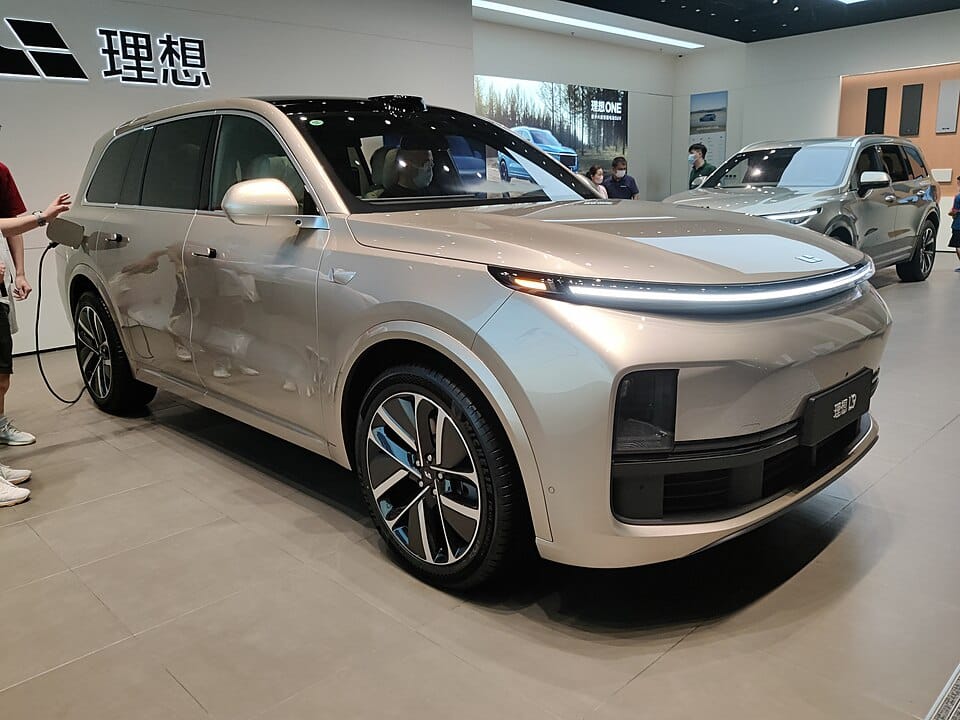
Li Auto Hits Seven Figures
Li Auto has become the fastest Chinese electric vehicle startup to reach one million cumulative deliveries, achieving the milestone in November 2025 — just four and a half years after its first delivery. The Beijing-based company, which specializes in large family SUVs with range-extended electric powertrains, celebrated the achievement at its Changzhou factory.
Founder and CEO Li Xiang said the milestone "proves that Chinese families want premium electric SUVs that eliminate range anxiety." Unlike pure battery electric competitors, Li Auto's vehicles use a small gasoline engine solely to generate electricity for the battery, providing total ranges exceeding 1,200 kilometers without needing to find a charging station.
Product Lineup Drives Growth
Li Auto's current lineup includes three models: the L6 (compact SUV, starting at 249,800 yuan), the L7 (mid-size SUV, starting at 319,800 yuan), and the L9 (full-size SUV, starting at 429,800 yuan). The L6, launched in April 2025, has become the company's volume leader with monthly sales consistently exceeding 20,000 units.
The company also launched the MEGA, its first pure battery electric MPV, which had a slower start but has seen improving sales after a price adjustment. Monthly MEGA deliveries have stabilized at approximately 3,000 units.
Financial Performance
Li Auto is one of the few Chinese EV startups that is consistently profitable. The company reported Q3 2025 net income of 3.8 billion yuan on revenue of 42.9 billion yuan. Vehicle gross margin was 21.2%, among the highest of any Chinese automaker and comparable to Tesla's automotive margin.
The profitability stems from Li Auto's focused product strategy — selling only large SUVs with high average selling prices — and its relatively lean operating structure. The company spends less on marketing per vehicle than competitors NIO and XPeng.
International Expansion Plans
Li Auto has been slower than Chinese competitors to expand internationally, focusing first on profitability in China. The company plans to enter Middle Eastern markets in 2026, followed by Southeast Asia. Europe remains uncertain due to potential tariff complications.
Deutsche Bank analyst Edison Yu said Li Auto "has the healthiest business model among Chinese EV startups" but cautioned that the company's dependence on the Chinese market — which accounts for 100% of revenue — is both a strength and a concentration risk.