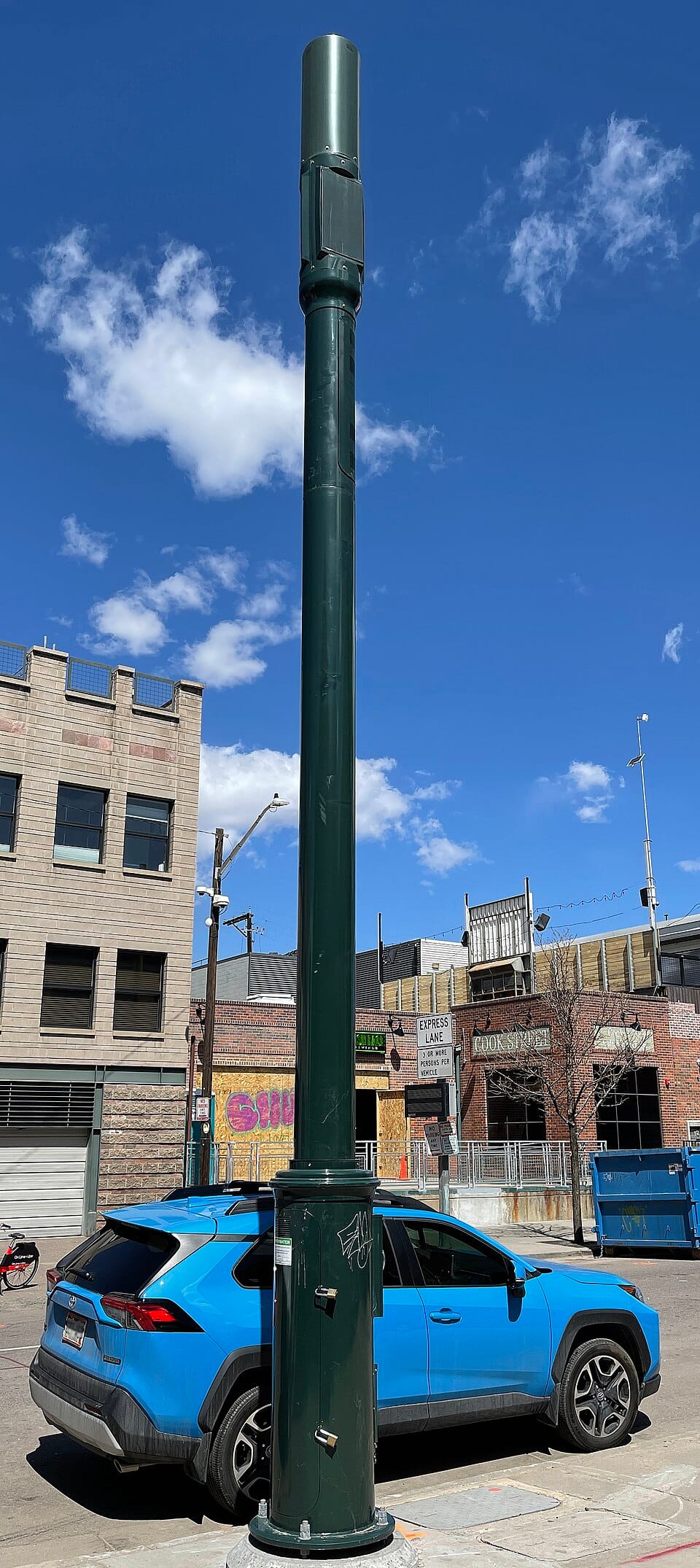
KT Fires Up 6G in Seoul
KT Corporation has activated the world's first commercial 6G pilot network in Seoul's Gangnam district, achieving wireless data transmission speeds exceeding 1 terabit per second using sub-terahertz frequencies. The pilot covers a 2-kilometer stretch along Teheran-ro, one of Seoul's major tech corridors.
KT CEO Kim Young-shub said the pilot "moves 6G from the laboratory to the real world." He emphasized that commercial 6G services remain several years away but that early field testing is essential to identify propagation challenges and develop practical use cases.
Technical Details
The pilot uses frequencies in the 140 GHz band, well above the millimeter-wave spectrum used for 5G. At these frequencies, data rates are dramatically higher but signal propagation is more limited, requiring denser base station deployments. KT is testing advanced beamforming and reconfigurable intelligent surface (RIS) technology to extend coverage.
Samsung Electronics and Nokia are providing base station equipment for the pilot. Samsung's 6G prototype base station uses a 1,024-element antenna array, quadruple the size of current 5G massive MIMO systems. Nokia is supplying the RIS panels that redirect and amplify signals around obstacles.
Potential Applications
KT demonstrated three use cases during the pilot launch: real-time holographic communication between two offices, autonomous drone fleet management with sub-millisecond latency, and an industrial digital twin that mirrors a factory floor with centimeter-level spatial accuracy.
Park Jae-hyun, head of KT's 6G research lab, said the holographic communication demo "is not a gimmick — it represents the kind of immersive telepresence that enterprises will demand for remote collaboration." The demo transmitted volumetric video at 100 gigabits per second with 5-millisecond end-to-end latency.
Global 6G Race
South Korea aims to commercialize 6G by 2030 and has allocated 1.2 trillion won ($880 million) for 6G research through its national science budget. Japan, China, the United States, and the European Union all have active 6G research programs, with most targeting similar 2030 timelines.
ITU is expected to finalize the 6G standard framework (IMT-2030) by 2028. Industry analysts note that South Korea's early pilot gives its companies — particularly Samsung and KT — significant input into standards development, replicating the advantage Korea gained by being the first to deploy 5G commercially in 2019.